
Hi, I'm Andie R. I live in Rhode Island.
Craig "The Water Guy" Phillips asked me to share my homeowner experience with local tap water from the city and the SoftPro ECO™ City Water Softener - Best Water Softener Systems for City Water I purchased.
This is how my adventures played out. I hope this helps you in your decision.
Six months ago, I was at my wit's end with our city water. Every morning brought the same frustration: soap scum coating our shower doors, white spots permanently etched into our glassware, and clothes that felt scratchy despite using fabric softener.
My coffee maker required descaling every few weeks, and our skin felt perpetually dry and irritated after showers. When our water heater repair technician mentioned that mineral buildup was significantly reducing its efficiency, I knew something had to change.
Living in Rhode Island, our municipal water supply carries substantial mineral content from the regional aquifers. While technically "safe" to drink, the hardness levels were wreaking havoc on our household systems and daily comfort.
The Problem That Finally Pushed Me Over the Edge
Did you know that hard water can reduce appliance lifespan by up to 48%?
I discovered this alarming statistic during my research, but it became painfully real when our dishwasher started leaving a white film on everything despite using rinse aids and premium detergents.
Our Rhode Island home sits in an area where groundwater naturally picks up calcium and magnesium as it moves through limestone deposits. The result: water testing at 14 grains per gallon of hardness—well into the "very hard" category according to the Water Quality Association standards.
The daily irritations were mounting:
• Shower doors required weekly deep cleaning with vinegar solutions
• Laundry felt stiff and looked dingy after just a few washes
• Hair became brittle and difficult to manage

• Appliance maintenance costs were increasing annually
When I calculated that we were spending nearly $300 annually on specialized cleaning products, fabric softeners, and extra detergents just to combat hard water effects, the financial motivation became clear. The breaking point came when our plumber showed me the mineral buildup inside our pipes during a routine service call.
Research Journey and Decision Process
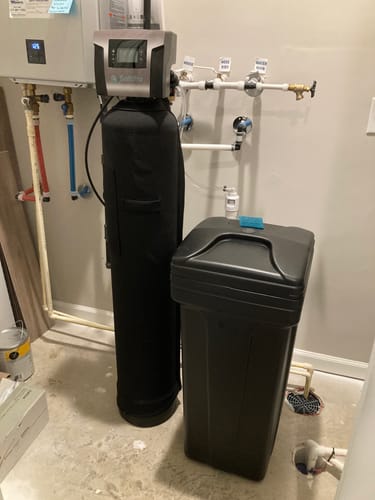
I spent three weeks researching water softening solutions, diving deep into ion exchange technology, salt-free conditioning systems, and reverse osmosis options. The learning curve was steeper than expected.
Initially, I considered salt-free water conditioners, attracted by the low maintenance promises. However, after speaking with local installers and reading independent testing reports, I learned these systems don't actually remove hardness minerals—they modify their behavior. For our severe hardness levels, multiple professionals recommended traditional ion exchange softening.
The SoftPro ECO caught my attention for several specific reasons:
• NSF/ANSI 44 certification for performance and safety
• Upflow regeneration technology promising higher efficiency
• Digital control head with actual usage-based regeneration
• 10-year manufacturer warranty on the mineral tank
• Sized appropriately for our four-person household at 48,000 grain capacity
What sealed the decision was the company's transparent approach to explaining their technology. Rather than making exaggerated claims, they provided detailed specifications, water usage calculations, and realistic expectations for regeneration frequency and salt consumption.
Unboxing and Initial Impressions
The system arrived in two separate shipments: the main unit and the brine tank. Packaging was excellent—heavy-duty cardboard with foam inserts protecting all components.
My first impression was the build quality. The mineral tank felt substantial, https://www.softprowatersystems.com/products/softpro-eco-water-softener constructed from fiberglass with a durable exterior finish. The digital control head appeared well-engineered, with a clear display and intuitive button layout.
Components included:
• 10" x 54" mineral tank with high-efficiency resin
• 18" x 33" brine tank with safety float
• Digital control valve with LCD programming display
• Installation hardware including bypass valve

The documentation impressed me—clear installation diagrams, detailed programming instructions, and maintenance schedules. Everything needed for installation was included except basic plumbing supplies.
Installation Experience and Setup

I chose professional installation despite being relatively handy with home projects. The complexity of integrating with our existing plumbing and ensuring proper electrical connections made professional installation worthwhile.
The certified installer took approximately four hours, including:
• Installing the bypass valve system on our main water line
• Connecting inlet and outlet plumbing with proper unions
• Running the drain line to our utility sink
• Establishing electrical connection for the control head
• Programming the system for our specific water conditions
• Testing all connections and running initial regeneration cycle
One challenge we encountered involved the drain line routing. Our utility room layout required a longer drain line than standard, necessitating an additional pump to maintain proper drainage flow. This added $150 to the installation cost but was necessary for optimal performance.
The installer tested our raw water hardness at 14.2 grains per gallon and programmed the system accordingly. He explained the regeneration process, showed us how to add salt, and demonstrated the bypass operation for any future maintenance needs.
Performance Testing and Real-World Results
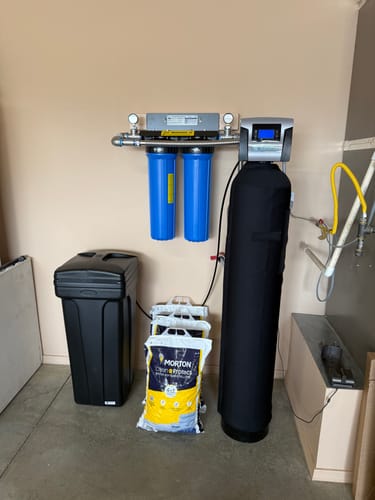
Within 24 hours, the difference was noticeable. I tested the treated water using TDS (Total Dissolved Solids) and hardness test strips, confirming the system was performing as designed.
Measured Results After Two Weeks:
• Raw water hardness: 14.2 grains per gallon
• Treated water hardness: Less than 1 grain per gallon
• TDS reduction: Approximately 15% (expected with ion exchange)
• Water pressure: No detectable reduction at fixtures
• Regeneration frequency: Every 6-7 days with our usage patterns
The upflow regeneration technology proved its efficiency claims. Salt consumption averaged 8-10 pounds per regeneration cycle, significantly less than our neighbor's conventional downflow system using 12-15 pounds.
After six months of operation, performance remains consistent. I periodically test the water hardness and have never measured above 1 grain per gallon post-treatment. The digital display accurately tracks water usage and regeneration timing.
Daily Living Impact and Unexpected Benefits
The transformation in our daily routines exceeded expectations. Shower experiences improved dramatically—soap lathers better, hair feels softer, and skin irritation decreased noticeably within the first month.

Household Changes We've Observed:
• Laundry: Clothes are softer, colors more vibrant, and we've reduced fabric softener usage by 75%
• Dishwashing: Glassware emerges spot-free, and we've eliminated rinse aid completely
• Cleaning: Bathroom cleaning time reduced by half, no more harsh mineral deposit scrubbing
• Appliances: Coffee maker hasn't required descaling in six months
• Personal care: Reduced soap and shampoo usage while achieving better results
Unexpected benefits included improved taste in our coffee and tea. The reduction in mineral content allows the true flavors to emerge without the metallic undertones we'd grown accustomed to.
Our teenage daughter's skin condition improved substantially. Her dermatologist noted the improvement and supported continued use of softened water for bathing.
Operational Costs and Maintenance Reality
Six months of operation provides realistic cost data. Salt consumption averages 40 pounds monthly, costing approximately $8-12 depending on salt type. We use solar salt crystals, finding them effective and reasonably priced.
Monthly Operating Costs:
• Salt: $10 average
• Electricity: Less than $3 (minimal power for control head)
• Water for regeneration: 45 gallons per cycle, approximately $0.50
• Total monthly: Under $14
Maintenance involves adding salt every 3-4 weeks and occasionally cleaning the brine tank. The system's salt efficiency means the 200-pound capacity brine tank requires refilling approximately every 5-6 weeks.
The digital control head displays remaining capacity and days until regeneration, eliminating guesswork about system status. We've experienced no mechanical issues, and the system operates quietly during regeneration cycles.
Cost savings include:
• Reduced cleaning product usage: $15 monthly
• Decreased detergent and fabric softener: $12 monthly
• Eliminated bottled water purchases: $25 monthly
• Reduced appliance maintenance: Estimated $200 annually
The system is essentially paying for itself through reduced household expenses while providing significant quality-of-life improvements.
Final Assessment and Recommendation
After six months with the SoftPro ECO, I can confidently recommend it for households dealing with moderate to severe water hardness. The system delivers on its performance promises while operating efficiently and reliably.
Key Strengths:
• Consistent performance with excellent hardness removal
• Efficient salt and water usage compared to conventional systems
• User-friendly digital controls with clear status information
• Solid build quality with comprehensive warranty coverage
• Professional installation support and customer service
Minor Considerations:
• Requires adequate space for both tanks
• Professional installation recommended for optimal performance
• Monthly salt monitoring and refilling needed
• Initial investment significant, though ROI becomes apparent quickly
For Rhode Island residents or anyone dealing with municipal water hardness above 10 grains per gallon, this system provides an effective solution. The quality-of-life improvements, combined with appliance protection and household savings, justify the investment.
Would I purchase again?
Absolutely. The SoftPro ECO has exceeded expectations for performance, efficiency, and reliability. Our household has adapted seamlessly to soft water living, and I can't imagine returning to hard water struggles.
If you're researching water softeners for city water applications, the SoftPro ECO deserves serious consideration. The technology works as advertised, the company stands behind their product, and the real-world benefits extend far beyond the initial water quality concerns that drove our purchase decision.