
Hi, I'm Sun Tao. I live in Chicago. Craig "The Water Guy" Phillips asked me to share my experience as a homeowner dealing with local tap water from the city and the SoftPro ECO™ City Water Softener - Best Water Softener Systems for City Water I purchased. This is how my adventure played out. I hope this helps you in your decision.
The Hard Water Problem That Drove Me to Find a Solution
Did you know that Chicago's water hardness levels can reach up to 7-8 grains per gallon?
I certainly didn't when I first moved into my Lincoln Park home two years ago. What I did know was that something was seriously wrong with my water quality, and it was affecting every aspect of daily life in ways I never anticipated.
The first red flag appeared within weeks of moving in. My brand-new stainless steel appliances started developing stubborn white spots that wouldn't come off with regular cleaning. My dishwasher, which I'd splurged on during the kitchen renovation, was leaving dishes looking cloudier than when they went in. The irony wasn't lost on me – I was rewashing "clean" dishes by hand almost daily.
But the real wake-up call came during my morning routine. My skin felt tight and itchy after every shower, and my hair – which had always been manageable – became dry and lifeless. I initially blamed the Chicago winter weather, but when spring arrived and the problems persisted, I knew something else was at play.
The financial impact started becoming apparent too. I was going through soap and shampoo at an alarming rate, needing twice as much product to achieve the same cleaning results. My clothes were fading faster despite using gentle detergents, and I noticed mineral buildup clogging my showerheads and faucet aerators every few weeks.
The breaking point came when my six-month-old coffee maker started producing bitter, off-tasting coffee despite regular cleaning. When I called the manufacturer's customer service, they asked about my water quality – something I'd never considered as a factor in appliance performance and taste.
My Research Journey Into Water Softening Solutions
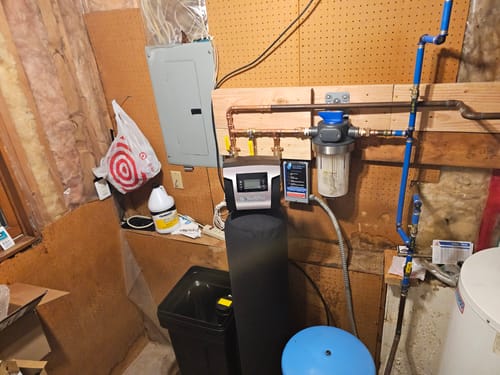
Once I identified hard water as the culprit, I dove deep into research mode. Living in Chicago, I learned that our water comes primarily from Lake Michigan and, while generally safe to drink, contains dissolved minerals like calcium and magnesium that create "hardness."
I started by testing my water using a simple hardness test kit from the hardware store. The results showed 7.2 grains per gallon – firmly in the "hard" category. Armed with this knowledge, I began exploring solutions.
My initial research revealed several approaches: salt-based ion exchange systems, salt-free conditioners, and reverse osmosis systems. Each technology had distinct advantages and limitations. Salt-based systems actually remove hardness minerals through ion exchange, while salt-free systems change the mineral structure to reduce scaling. RO systems remove almost everything but seemed like overkill for my specific needs.
I spent weeks comparing specifications, reading technical documentation, and trying to understand concepts like regeneration cycles, resin capacity, and flow rates. The learning curve was steep – terms like "grains capacity," "backwash," and "brine tank" were completely foreign to me initially.
What became clear was that for genuine hard water treatment, ion exchange technology was the gold standard. Salt-free systems had appeal due to lower maintenance, but they didn't actually remove the minerals causing my specific problems – they just altered them to reduce some scaling effects.
Size and capacity calculations proved crucial. For a household of two with moderate water usage, I needed a system that could handle approximately 300-400 gallons per day during regeneration cycles without running out of soft water. This led me to focus on systems with 24,000-32,000 grain capacities.
After researching major brands and reading countless reviews, the SoftPro ECO emerged as a compelling option. Its combination of proven ion exchange technology, reasonable pricing, and positive user feedback aligned with my requirements. The fact that it was specifically designed for city water applications made it particularly relevant for my Chicago situation.
Why I Chose the SoftPro ECO Over Other Options
The decision-making process came down to several key factors that the SoftPro ECO addressed better than alternatives I considered.
First was the control valve technology. The SoftPro Valve system offered programmable regeneration based on actual water usage rather than just time-based cycles. This appealed to my efficiency-minded approach – why regenerate the system if I'd been traveling and hadn't used much water? The demand-initiated regeneration meant lower salt consumption and reduced waste.
Capacity was another deciding factor. The 32,000-grain model I selected provided roughly 10-12 days between regenerations based on my household's usage patterns. Larger capacity systems felt like overkill and unnecessary expense, while smaller units would require more frequent maintenance.
The bypass valve configuration was surprisingly important. During research, I learned that bypass capability allows you to temporarily use unsoftened water for applications like watering plants or washing cars, where soft water isn't necessary or even desirable. The SoftPro ECO's integrated bypass made this simple.
Installation requirements sealed the deal. Unlike some systems requiring extensive plumbing modifications, the SoftPro ECO worked with standard 3/4-inch connections and didn't require special electrical beyond a standard outlet. My basement setup could accommodate it without major modifications.
The warranty and company reputation provided peace of mind. SoftPro's focus on water treatment systems rather than being a general appliance manufacturer suggested specialized expertise. The 10-year tank warranty and 5-year valve coverage offered protection for what I hoped would be a long-term investment.
Price-wise, it fell into the middle range – not the cheapest option available, but not premium-priced either. Given the features and capacity, the value proposition made sense for solving my specific hard water challenges.
Unboxing and First Impressions of Build Quality

The delivery arrived exactly when promised – always a good sign when you're dealing with a significant purchase. The packaging was substantial but well-organized, with clear labeling indicating which box contained which components.
Opening the main tank revealed impressive build quality immediately apparent in the fiberglass construction and professional finish. At roughly 150 pounds when filled with resin, this wasn't a lightweight appliance, but the substantial feel suggested durability rather than bulk.
The SoftPro Valve mounted on top looked more sophisticated than I'd expected from product photos. The digital display was clear and intuitive, with straightforward button controls that didn't require an engineering degree to understand. Build quality felt solid – no cheap plastic components or loose fittings that might indicate corners cut during manufacturing.
Component inspection revealed attention to detail in the engineering. The resin tank featured a threaded top that sealed securely, and the internal distributor tube was properly positioned. The brine tank included a safety float mechanism and overflow fitting – small details that suggested thought given to real-world operation.
Documentation quality exceeded expectations. Instead of the typical poorly translated manual, SoftPro provided clear installation guides with actual photographs rather than confusing line drawings. The programming instructions were written in plain English, making initial setup much less intimidating.
All necessary fittings, adapters, and connection hardware were included. Having everything needed for installation in one package eliminated the frustration of mid-project hardware store runs that plague many DIY installations.
Installation Experience and Initial Setup Process
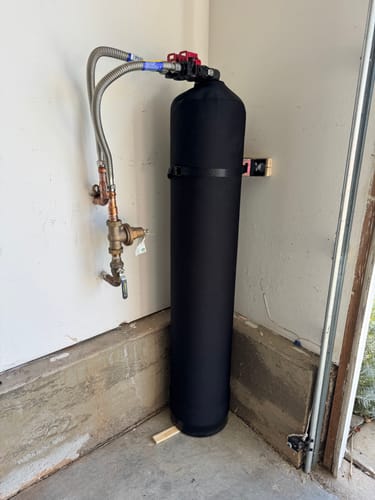
I decided on professional installation after assessing the plumbing requirements. While the SoftPro ECO didn't require extensive modifications, cutting into the main water line wasn't something I wanted to tackle myself given the potential for costly mistakes.
My plumber arrived with the system's installation manual already reviewed – always encouraging when professionals take time to prepare. The installation process took approximately four hours, including time to properly flush and program the system.
The most complex part involved installing the bypass valve assembly and integrating it with my existing plumbing. The SoftPro Valve's design simplified this somewhat, but proper positioning required careful measurement to ensure adequate clearance for future maintenance access.
Drainage for regeneration cycles required connecting to my utility sink drain – straightforward in my basement setup, but something to consider if your installation location lacks convenient drain access. The system needs to discharge approximately 25-30 gallons during backwash and rinse cycles.
Initial programming involved setting water hardness level (7.2 grains), household size, and regeneration preferences. The SoftPro Valve's menu system made this intuitive – no complex programming sequences or cryptic codes to memorize. We set it for demand regeneration at 3 AM when water usage would be minimal.
The first regeneration cycle was educational to observe. The various stages – backwash, brine draw, slow rinse, and fast rinse – each served specific purposes in cleaning and recharging the resin bed. Total cycle time was approximately 90 minutes, during which the system automatically handled everything.
Initial water testing showed immediate results. Hardness dropped from 7.2 grains to less than 1 grain per gallon – well within the "soft" range that would address my appliance and personal care issues.
Real-World Performance Testing and Daily Results
The transformation in water quality became apparent within 24 hours of installation. The first shower revealed the most dramatic difference – my skin felt noticeably different, less tight and dry. Hair management improved significantly, requiring less conditioner to achieve the softprowatersystems.com same softness.
I conducted systematic testing to quantify the improvements. Using both test strips and a digital TDS meter, I tracked hardness levels, chlorine content, and total dissolved solids over the first month of operation. Hardness consistently measured below 1 grain per gallon, confirming the system was performing as designed.
Appliance performance improvements were equally impressive. My dishwasher began producing genuinely spot-free glassware for the first time since moving in. The difference was dramatic enough that guests commented on how clear my glassware looked – validation I wasn't imagining the improvement.
Coffee quality improved substantially. Using the same beans and brewing method, the coffee became noticeably smoother and less bitter. I hadn't realized how much the mineral content was affecting extraction and taste until experiencing properly softened water.

Cleaning efficiency increased across the board. Soap and shampoo consumption dropped by roughly 40% while achieving better results. Laundry detergent effectiveness improved dramatically – clothes emerged brighter and felt softer without fabric softener additives.
I tracked regeneration frequency to verify capacity claims. With our usage patterns, the system regenerated every 11-13 days, consuming approximately 6-8 pounds of salt per cycle. This aligned well with manufacturer specifications and suggested efficient operation.
Seasonal variations provided additional testing opportunities. During summer months when water usage increased due to additional showers and lawn care, regeneration frequency increased to every 8-10 days. The system adapted automatically without requiring manual adjustments.
Six months in, I measured scale buildup on fixtures that had been problematic previously. Showerheads and faucet aerators remained clear, requiring only occasional cleaning rather than the weekly maintenance they'd needed before.
Long-Term Ownership Costs and Maintenance Reality
Eight months of ownership has provided realistic insight into the ongoing costs and maintenance requirements that weren't immediately obvious during initial research.
Salt consumption averages 15-20 pounds monthly, costing approximately $8-12 depending on where I purchase it. I've found that solar salt pellets work best – they dissolve cleanly and minimize brine tank residue that can affect performance.
Electricity consumption is minimal but measurable. The SoftPro Valve draws power continuously for the display and timer functions, plus additional power during regeneration cycles. My utility monitoring suggests approximately $3-4 monthly in additional electricity costs.
Water consumption during regeneration cycles adds roughly 300-400 gallons monthly to my bill. At Chicago's water rates, this represents about $6-8 monthly in additional utility costs. The improved efficiency of soaps and detergents partially offsets this expense.
Maintenance requirements have been straightforward. Monthly salt level checks take just a minute, and I add 1-2 bags as needed. The brine tank requires occasional cleaning to remove any accumulated sediment, but this has only been necessary twice in eight months.
I've performed two resin bed cleanings using iron-out products, following manufacturer recommendations. This process involves adding cleaning solution to the brine tank and initiating an extra regeneration cycle. Each cleaning costs about $8 and takes 2 hours including preparation time.
No component failures or service calls have been required. The SoftPro Valve has operated reliably, maintaining programmed settings through several power outages without losing configuration data.
Cost comparison to my previous situation shows clear savings. Reduced soap and detergent consumption saves approximately $15-20 monthly. Eliminating bottled water purchases saves another $25-30 monthly. Extended appliance life and reduced maintenance represent additional long-term savings that are harder to quantify precisely.

Total monthly operating costs average $20-25, while savings from improved efficiency and eliminated bottled water exceed $40-50 monthly. The net positive cash flow helps justify the initial investment beyond just quality-of-life improvements.
What I Wish I'd Known Before Purchasing
Several aspects of water softener ownership became apparent only through experience, and understanding these factors earlier would have improved my decision-making and expectations.
Space requirements extend beyond just the unit dimensions. You need adequate clearance around the system for salt loading, maintenance access, and potential service. I initially planned to position mine in a tighter spot but realized the importance of accessibility during the first salt refill.
Regeneration scheduling matters more than I anticipated. While 3 AM works well for most situations, house guests or unusual water usage can create conflicts. Having backup timing options programmed becomes valuable during holidays or when hosting family.
Salt quality affects performance significantly. Cheaper rock salt creates more brine tank residue and can leave mineral deposits that interfere with proper operation. Solar salt pellets cost slightly more but eliminate most of these issues.
Water pressure considerations weren't initially obvious. During regeneration cycles, the system bypasses to hard water, but pressure drops slightly due to the bypass valve configuration. This rarely affects daily use but is noticeable during high-demand periods.
Drinking water taste changes with softened water due to the sodium content from ion exchange. While not unhealthy for most people, those on sodium-restricted diets should consult physicians. I've grown accustomed to the taste, but some people prefer unsoftened water for drinking.
Environmental considerations around salt discharge weren't part of my initial research. The regeneration process sends salt brine to the sewer system, which can affect septic systems or contribute to groundwater salinity in some areas. This wasn't problematic in my situation but worth investigating.
Warranty coverage details matter for long-term planning. Understanding what's covered, service procedures, and local dealer support becomes important if issues arise. SoftPro's warranty terms are reasonable, but knowing the process beforehand eliminates surprises.
Backup planning during service needs wasn't considered initially. If the system requires repair, you return to hard water until resolution. Having contact information for service providers and understanding emergency bypass procedures prevents panic during problems.